Beginning
Under the leadership of
- Chairman
- Mon Chamling
- Secretary
- Ran Khajum
- Sewaba Coordinator
- Deo Khajum

Kirat Religion Organization of Pennsylvania
Our faith, our history, and the traditions we carry forward together.

Kirat is a term used to identify the indigenous ethnic groups inhabiting the Himalayas extending eastward from Nepal into India, Bhutan, Burma, and beyond. Currently, Kirats are also found spread all across the globe, and many of them are in Pennsylvania. With the increase in the Kirat population in the PA, it became necessary to form an organization to create a common platform for sharing experiences, making plans and policies to collectively celebrate the rich cultural heritage of the Kirats, identifying common problems and possible solutions to strengthen the community with the goal of becoming a vibrant community and productive citizens of the country. Therefore, the Kirat Religion Organization of Pennsylvania, Inc. was established in Harrisburg, Pennsylvania, in 2012.
Kirat Religion Organization of Pennsylvania, Inc. is a non-profit organization that is organized exclusively for charitable, religious, cultural, and educational purposes.
Some of the main objectives of the organization are as follows.
• To practice, preserve, and promote Kirat script, language, culture, and religion.
• To communicate and advocate for necessary support and assistance to the Kirat community members in America.
• To facilitate and enable the Kirat community members to integrate themselves into the American mainstream society.
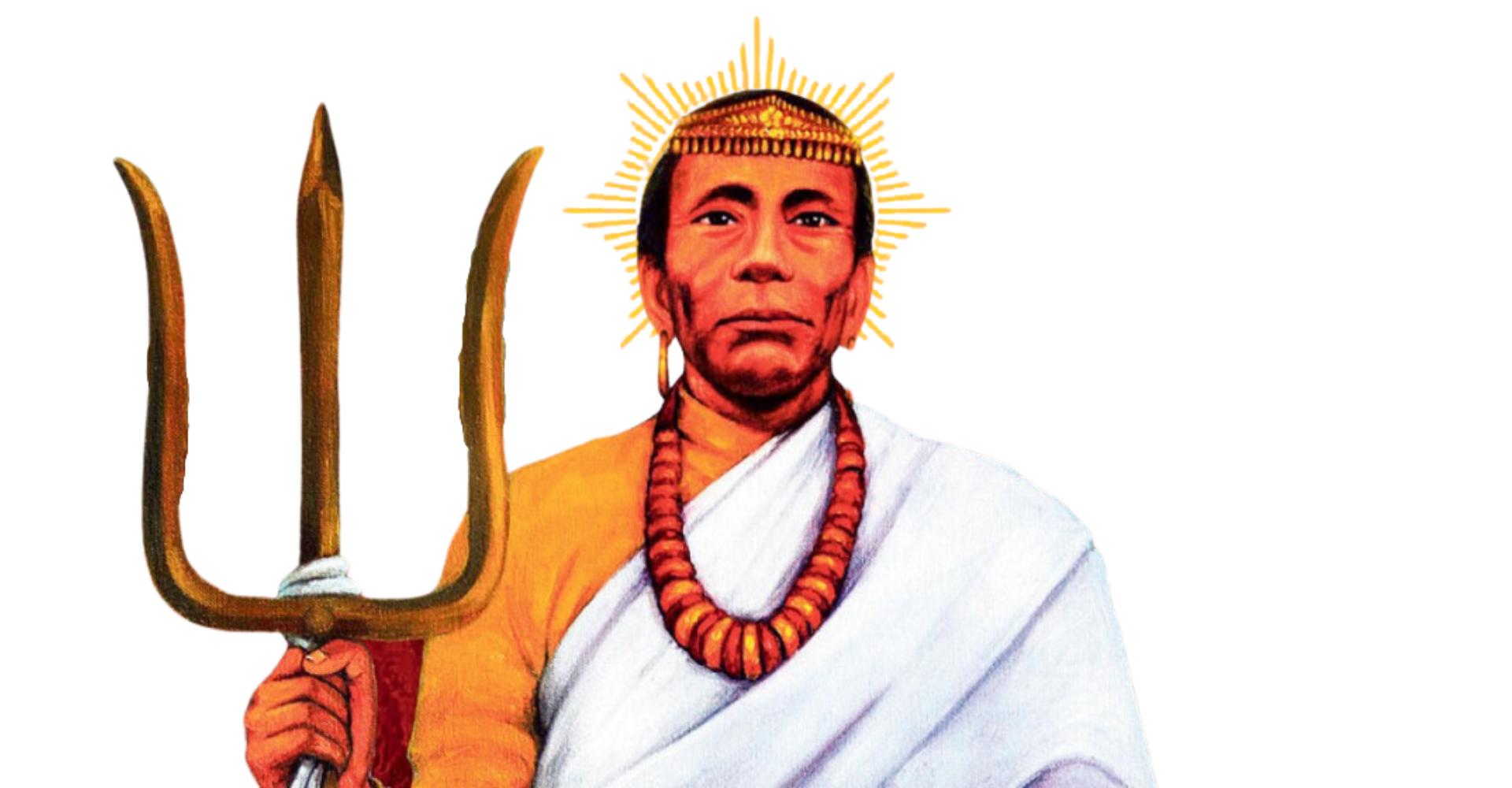
His Holiness Falgunanda Lingden was born on 11/08/1885, in Dandagaun of Chukchinamba village, Ilam district, Nepal. At a very tender age of eight years, His Holiness
Falgunanda is believed to have acquired special divine powers. Later, he underwent deep meditation and attained enlightenment at Khatrakpa on the side of the Mai River in the Ilam district of Nepal.
His Holiness Falgunanda served some years in the army under the 7 Rifles Gurkha Battalion in Burma during the first world war. His Holiness Falgunanda traveled far and wide, spanning from Nepal to India and Bhutan preaching the importance of Truth. Because of his emphasis on holding fast to the Truth, he was lovingly referred to as ‘Satya Hangma,’ meaning the ‘Queen of
Truth’.
His Holiness Falgunanda is widely known for introducing the Kirat Samjik Mundhum (Holy Scripture) in written form and spreading Kirat religion and philosophy to a broader audience.
He is remembered for his outstanding socio-cultural and religious messages in the Kirat society.
He emphasized education as a means of acquiring knowledge leading to the ultimate truth of the realization of God. He asked people to stop drinking alcohol. He told them to stop making animal sacrifices in the name of God. He stressed living a simple and truthful life. He asked his followers to believe in nothing but one true God, Tagera Ningwabhu Mang. He built many Manghims (i.e., houses of God)- for the believers to meet, pray, worship, and meditate- the only means to salvation from the vicious cycle of birth and death.
His Holiness Falgunanda is popularly known as Maha Guru, meaning the Great Teacher. He is revered in the Kirat society as Muhingum Ongsi Mang.
His Holiness Falgunanda is believed to have performed numerous miracles during his lifetime. His holiness Falgunanda Lingden passed away peacefully on 04/04/1949, amidst his bewailing disciples and followers.
He has been conferred the title of Rashtriya Bibhu-ti of Nepal, i.e., the National Luminaries of Nepal, by the Government of Nepal in recognition of his contributions to the nation's pride.
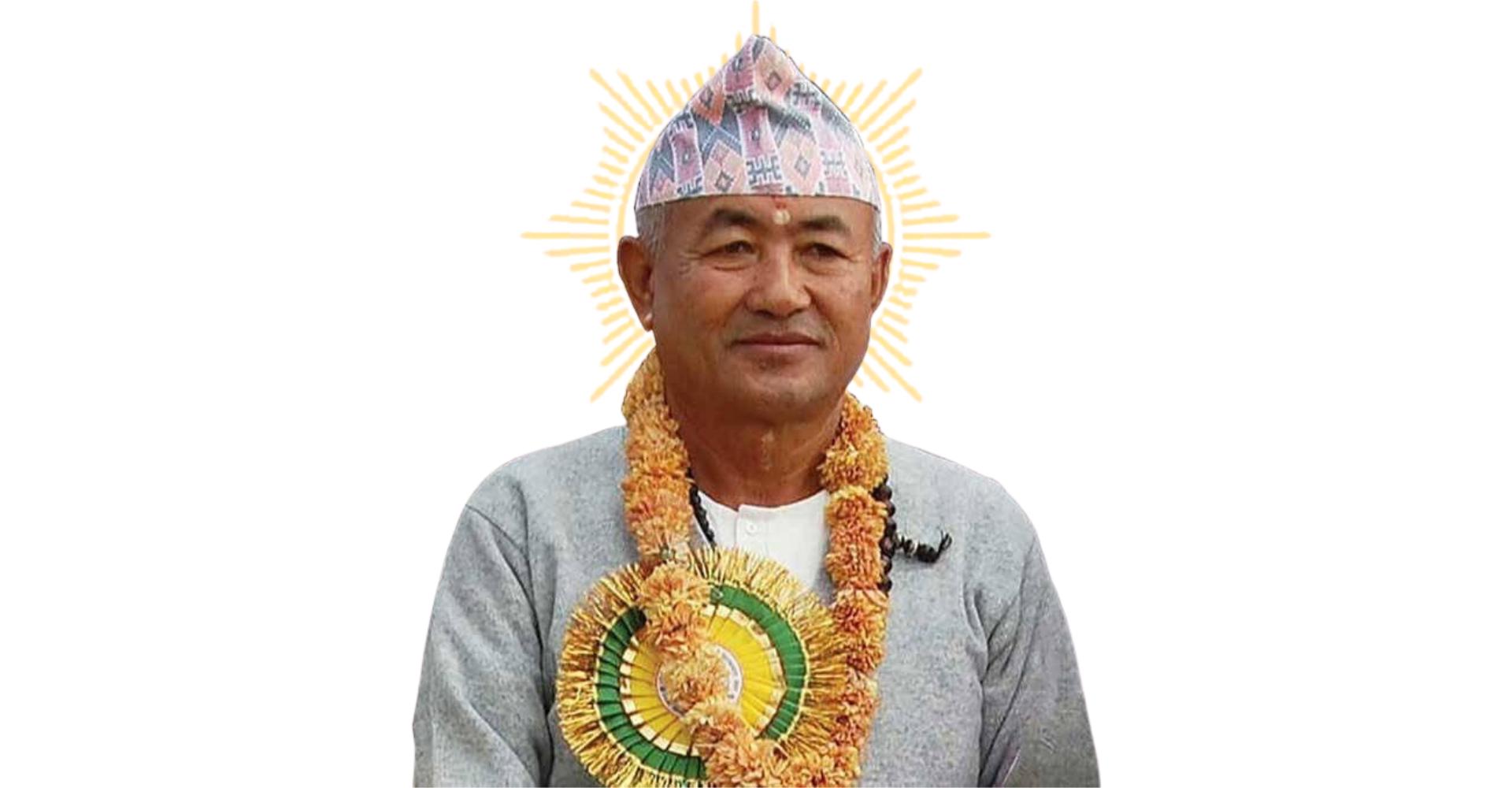
Born on 12/03/1954, in Agotebari of Chukchinamba village in the Ilam district of Nepal, His Holiness Atmananda Lingden ‘Seing’ is believed to be the reincarnation of His Holiness Falgunanda Lingden. He has stated that his main task during his lifetime is to continue to work and complete the mission started by His Holiness Falgunanda, i.e., to achieve global peace and human unity. He has said, ‘I was concerned only for my awakening, but after attaining the Samadhi (i.e., enlightenment), Tagera Ningwabhu Mang (the Supreme God) assigned me to complete the work started by Falgunanda’.
His Holiness Atmananda attained enlightenment when he was sixteen years old at Sadhu Gufa. (i.e., yogi-cave), Fulungi, which lies at the confluence of the three rivers, viz., Deumai, Mekwa, and Mai, in Ilam.
Under the guidance and supervision of His Holiness Atmananda, several books on Kirat Samjik Mundhum have been edited and published. Many Kirat manghims and statues of Falgunanda have been constructed and consecrated. Numerous social, cultural, and religious programs have been launched, as well as national and international conferences have been organized to promote peace, mutual understanding, and unity in the global society.
The hermitage of His Holiness Atmananda, located in Larumba, is a sacred place. People from Nepal and the neighboring countries, such as India, Bhutan, and Burma, and also the seekers from around the world, travel to this place to pay homage and receive his blessings. It has become a de facto center of learning of Kirat religion, philosophy, culture, traditions, and customs.
His Holiness Atmananda Lingden is lovingly and respectfully known among the believers by the name of Muhingum Ongsi Atmananda Lingden ‘Seing’.
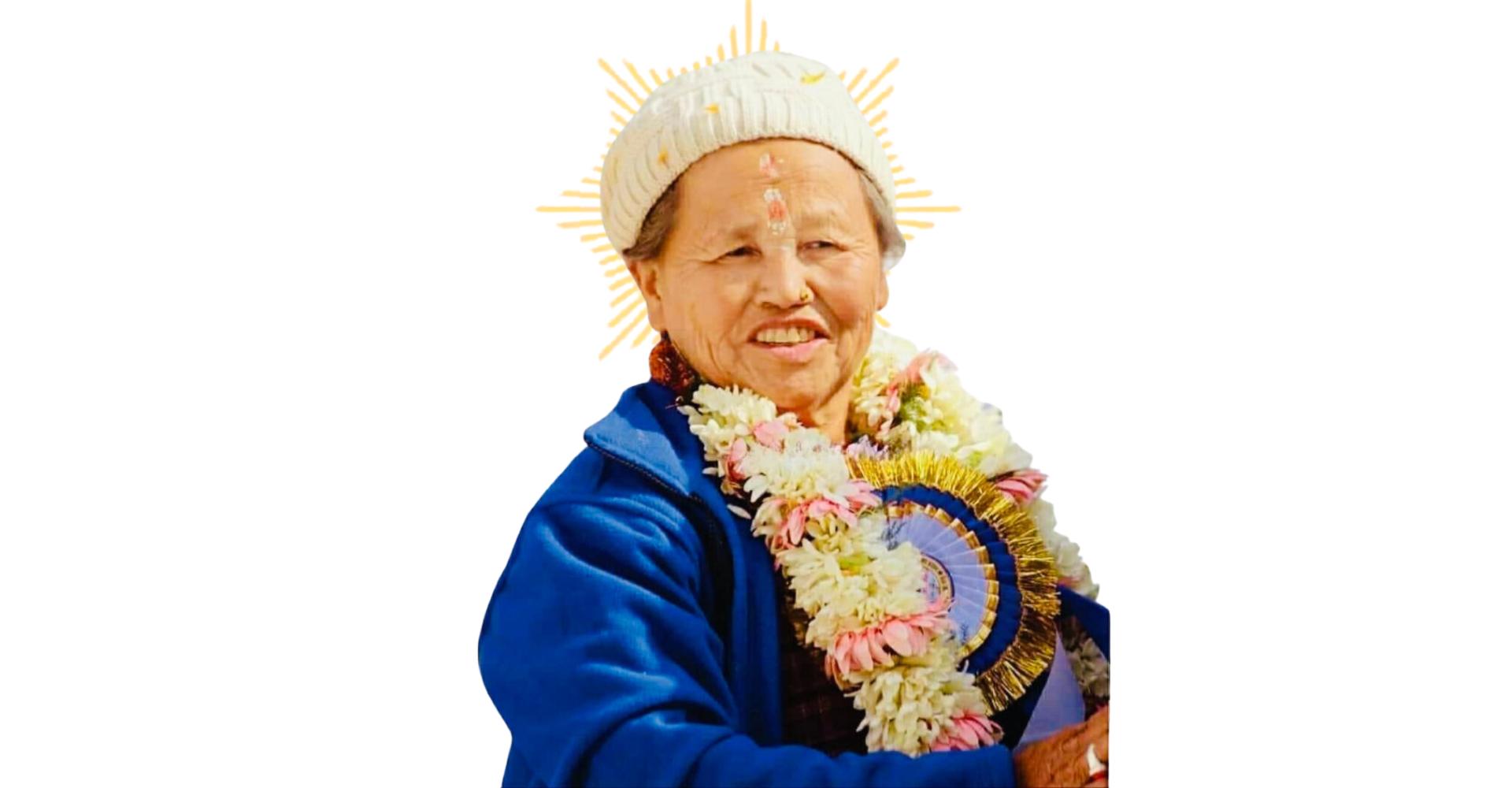
Guru Aama Pabitra Hangma Sanba Lingden is the wife of his Holiness Atmananda Lingden ‘Seing’. She has a huge, revered role in the Kirat community. She provides guidance and protection of the Kirat religion in all circumstances.
She was born on 02/14/1957, as the eldest daughter of Subba Birkha Bahadur Sanba and Kaushila (Aishwari) Samsuhang. She was born in Ratuwa Bensi, a barren village in the far east of Ilam, Nepal. Her whole childhood was spent in shepherding and farming. According to the Mang's predetermined plan, she got married to His Holiness Atmananda Lingden ‘Seing’ on 02/05/1976, in Chukchinamba Manghim. After their spiritual marriage ceremony at the Manghim, she has had to shoulder an additional responsibility as Guru Aama Pabitra Hangma Sanba Lingden. Consequently, she established herself as a venerable person by maintaining a worldly Karmic lifestyle while protecting the Kirat religion and culture. The followers of the Kirat religion consider her Yuma Mang- the manifestation of the goddess, and they have adorned her with the title of Muhingum Ongsi Mamang.
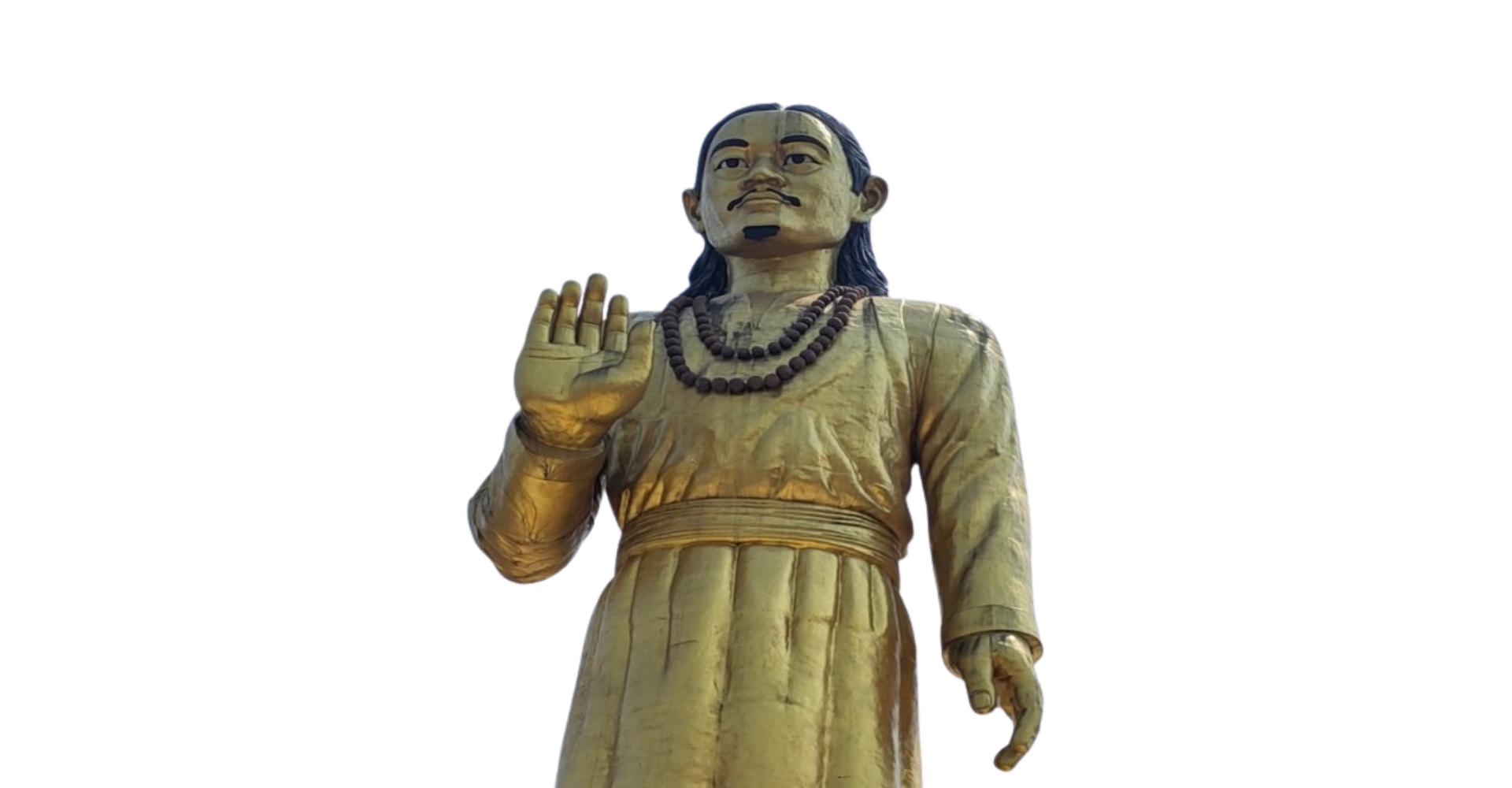
Tye Ongsi Sirijunga Singh Thebe was an 18th-century Kirat script resurrector, great scholar, educator, historian, linguist, leader, and philosopher. He was born on 12/12/1704 (B.S. 1761 Mangsir 27) from his mother Pudhangma and father Paruhang in Telloktar, one of the villages of Limbuwan (now Sirijunga Rural Municipality, Taplejung), Nepal. He was formerly known as Sirichongba and later popularly known as Sirijanga.
He researched and taught Kirat script, language, and religion, which helped the Kirat people to know more about their literature, culture, history, and tradition. In doing all of this, Sirijanga laid the foundation for the Kirat ethnic revival and contributed significantly to the resistance against Tibetan Buddhist cultural domination.
In present-day terms, Sirijanga’s ethnic movement can be said to be one of the fist Kirat (Limbu) movements through education. Sirijanga’s writing and teachings through the Limbu alphabet (now Kirat script) and literary texts he collected from different monasteries and villages attracted
a significant number of Limbus and Lepchas and led to the start of an ethnic awakening. As a result, he was killed in Martham, Hee-Bermoik in West Sikkim in 1741, tied to a tree, and shot by numerous poisoned arrows by Tibetan Lamas or Bhutia soldiers.
His contribution to spreading the Kirat script, Kirat language, Mundhum, and literature are immense. The Postal Services Department, Nepal Philatelic Bureau, Kathmandu, has issued a Postal Ticket in his name in the personalities series. He is always revered and remembered among Kirat Community for his contributions and sacrifice for the Kirat language, script, literature, and identity.
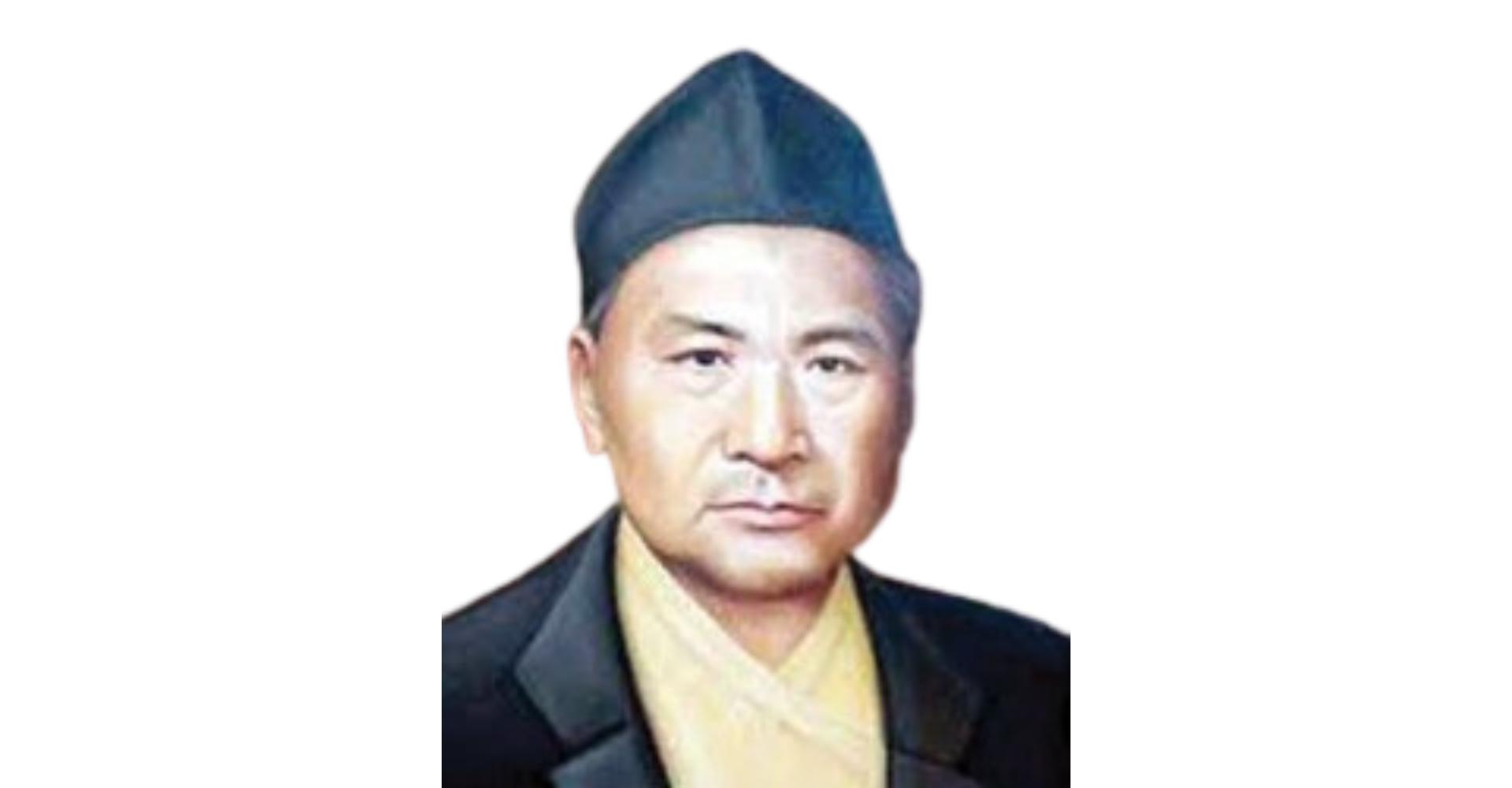
Iman Singh Chemjong was a Kirat historian of Nepal. He was born on 01/01/1904, in Renkebung, Darjeeling, India, to his parents, Devapu Hangma and Megbar Singh Chemjong. He got his Certificate Level education in 1928 and was about to enroll for a Bachelor's degree when his father, Megbar Singh Chemjong, died. As a result, he had to put his academic aspirations on hold. He devoted his entire life to studying and documenting various facets of Kirat tradition & culture when such activities were frowned upon and even punished by the Nepalese ruling elite as being subversive and anti-national. His research and publications on Kirat's history and culture challenged perceptions of the Nepalese official doctrine as a Hindu cultural monolith devoid of alternative narratives. A turning point in Chemjong’s life began in 1925 when the legendary Limbu activist Lalshore Sendang visited Kalimpong, Darjeeling, and met Limbu elders and activists.
Chemjong researched the Limbu language and culture in Limbuwan (Eastern Nepal), Darjeeling, Sikkim, and Assam. In his lifetime, he published the following works: Kirat Itihas 1948, Kirat Sahityako Itihas 1955, Kirat Folklore 1961, Kirat Mundhum 1961, Limbu-Nepali-English Dictionary 1961, Kirat Mundhum Khahun 1965, Kirat History and Culture 1967, Kirat Darshanko Saransha 1969, Lepcha-Nepali-English Dictionary 1969, Bijayapurko Itihas 1974, King Mahendra invited Chemjong to join Nepali’s Tribhuvan University in the capacity of Kirat Bhasa Sanskriti Visheshagya (i.e., Kirat Language & Culture Expert in 1961. For years until his death, he headed a one-man Kirat research team at the then Nepal’s only University. Today, the Kirat community spread across the world revere Chemjong as a hero for almost single-handedly researching and documenting various aspects of Limbu & Kirati life at a time when such activities were neither encouraged nor fashionable. Various functions are held each year to commemorate Chemjong’s contributions.
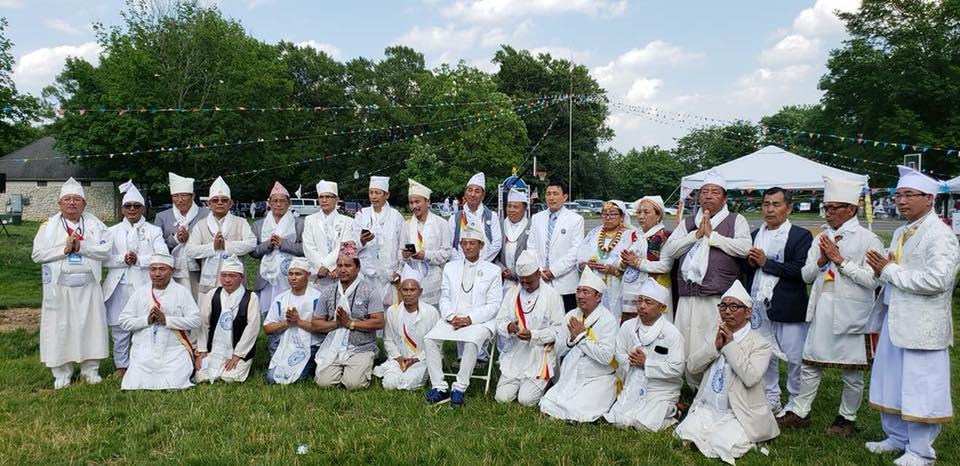
The Kirat National Event is one of the most important events in which the Kirat and Non-Kirat families from different cities and States of the United States get together for a grand celebration once a year with the vision of creating a universal peace, human unity, and wellbeing of all living beings. It plays a vital role in preserving, practicing, and promoting the Kirat religion, the Kirat Mundhum, culture, language, literature, and traditions. Additionally, this event helps to build new connections and strengthen the existing relationships among the Kirat families for greater unity and love for one another. Lastly, the significance of this event is to instill social, cultural, and religious values in the hearts of the younger generations so that they can carry on these values for generations to come.
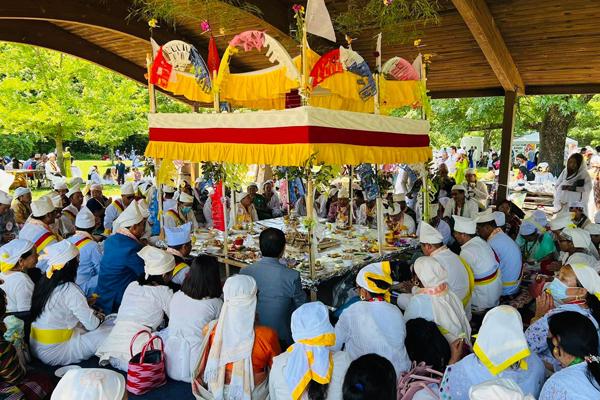
Khibekwa Yakwa Sewa (Ubhauli Sewa) is one of the greatest festivals of the Kirat Communities living across the globe. It is celebrated once a year, coinciding with the planting season.
It is believed that this festival has been celebrated since the beginning of the ‘Agricultural Age ‘on Earth. The Kirat people pray to Mother Nature in which the Mangsewasabas/ Mangsewasamas (Priests) recite “Samjik Mundhum” - the Kirat holy book, perform rituals and offer prayers for good crops and protection from natural calamities.
Khibekwa Yakwa Sewa provides the Kirat communities a great opportunity to pray collectively for prosperity, universal peace, human unity, and wellbeing of all living beings.
Sakela, Manglang, and K-lang dances are performed during this festival. These dances reflect the deep connections that the Kirats have with their land and nature. The hymns (Mang Sewa Samlo) are also sung on the occasion. Kirati people, both young and old, adorn themselves with beautiful traditional dresses to match the significance of the festival.
In the United States of America, Khibekwa Yakwa Sewa is celebrated at the National level every year.
A journey of faith and service
Key milestones and leadership transitions in the evolution of the Kirat Religion Organization of Pennsylvania, Inc.
Under the leadership of
Under the leadership of
Under the leadership of
Under the leadership of
On August 30, 2022, KROP registered with the Commonwealth of Pennsylvania.
On September 15, 2023, KROP was recognized as a 501(c)(3) organization under IRS Section 170.
Under the leadership of
Under the leadership of
Content migrated from KROP’s previous website snapshot · copied 09/10/2026. External forms, documents, and live feeds remain on their existing services.